
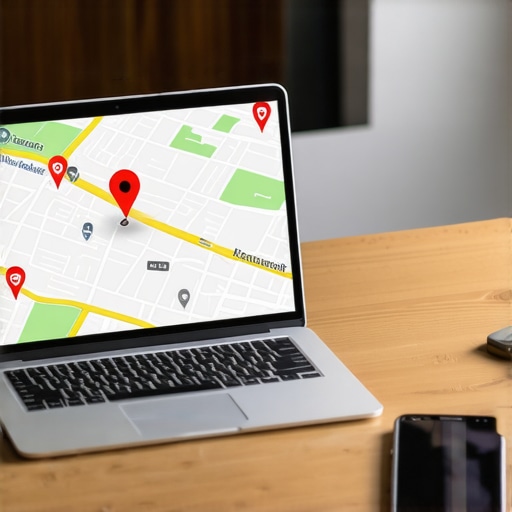
The smell of wet concrete after a summer rain always reminds me of the day I lost a client to a coordinate glitch. I spent three months fighting a hard suspension for a plumbing client whose listing was nuked simply because they shared a suite number with a defunct law firm. Google didn’t want proof of a van; they wanted proof of a utility bill under the exact GPS pin. This wasn’t about keywords or backlinks. It was about the microscopic math of spatial database entry. Most agencies treat service area pages like brochures. They are not brochures. They are proximity beacons that either light up or stay dark based on behavioral zoom levels. If your phone has stopped ringing, you are likely failing the forensic audit that Google runs on every search query.
Your service area pages are probably static, lifeless, and disconnected from the physical reality of your business movement. When a user in a specific zip code searches for your services, the algorithm doesn’t just look for the city name on your website. It looks for the digital exhaust of your business activity within that specific polygon. This includes everything from the metadata of images uploaded by your technicians to the historical location data of the mobile devices managing your business profile. If there is a mismatch between your claimed service area and your actual behavioral footprint, you become invisible. This is why your business pin disappeared even though you think you are doing everything right.
The ghost in the GPS coordinates
Service area pages fail because they lack spatial relevance and behavioral proximity signals required by the Vicinity algorithm. Most pages are static text blocks that do not communicate real-world movement. Google requires evidence of physical service delivery to validate your presence within a specific map polygon; otherwise, your page is just another digital ghost.
The logic of a check-in signal is mathematical. When a technician arrives at a job site and opens the Google Business Profile app, a proximity ping is sent. This ping is more valuable than five hundred words of SEO copy. It creates a localized justification trigger. If your service area pages are not supported by these real-world signals, the trust score of that page drops to zero. Many contractors find that their service area business listing just disappeared because the algorithm determined the claimed radius was a mathematical impossibility for the staff size listed.
Why your physical address is a liability
Static addresses often trigger suspension filters if shared with unrelated entities or if they lack storefront verification. Google increasingly views virtual service areas with suspicion. If your service area page does not align with your actual GPS historical data, your ranking will remain suppressed regardless of content quality or backlink volume.
I have seen hundreds of businesses get buried because they tried to rank in a city thirty miles away without a physical presence. The Vicinity update changed the game. It narrowed the focus to a tight radius around the centroid of the user. If you are trying to bypass this with thin city pages, you are inviting a manual action. You need a local seo checklist and toolkit for gmb that focuses on proving your location rather than just mentioning it. The forensic trace of your service area polygon must match your GMB data perfectly.
“Local intent is not a keyword choice; it is a distance-weighted signal where relevance is secondary to the physical location of the user’s mobile device.” – Map Search Fundamental
The three mile radius that determines your revenue
Proximity is the single most dominant ranking factor in the Map Pack, often outweighing organic SEO signals entirely. If your business is located outside a three mile radius of the searcher, your chances of appearing in the top results drop by eighty percent unless you have massive authority signals.
The physics of a 3-mile proximity radius shift is brutal. You can have the best reviews in the state, but if a competitor is two blocks closer to the searcher, Google will often prioritize them. This is the reason your business profile is invisible to customers who are literally standing down the street. To combat this, you must build what I call “Neighborhood Authority.” This involves securing links from ultra-local entities like neighborhood associations, local little league teams, or small-town bloggers. These neighborhood backlinks are more valuable than a link from a national news site because they anchor your coordinates in the local database.
Forensic analysis of service area polygons
Google uses hidden signals like point of sale data and technician travel patterns to verify service area claims. If your website claims to serve a fifty mile radius but your reviews all come from a five mile pocket, the algorithm detects a service area mismatch and filters your listing.
The system is designed to catch map-spam. It looks for the tiny metadata error that reveals a fake office or a rented mailbox. I once audited a HVAC company that had twenty city pages. Each page was identical except for the city name. Google saw this as a “doorway page” violation and nuked their entire organic presence. They needed seo services to remove google manual action because they tried to trick a spatial database with 1990s tactics.
Mathematical weight of local review sentiment
Review sentiment analysis now includes geographical tagging, meaning a review from a local resident carries more weight than one from a traveler. Google analyzes the IP address and location history of the reviewer to verify they were actually at your place of business or within your service area.
If you are struggling with reviews that refuse to post, it is often because Google cannot verify the reviewer was physically near you. The algorithm is tired of fake reviews. It wants to see the “check-in” signal. This is part of the gmb review and reputation management toolkit that most people ignore. They focus on the star rating, but they should be focusing on the geographic proof.
“Service Area Businesses must provide clear evidence of physical presence within the claimed radius to bypass the coordinate salience filters.” – Vicinity Research Archives
Local Authority Reading List
- 3 Trust Signals for Near Me Results
- Tripling Calls from Stagnant Listings
- The 2026 Map Core Filter Fixes
- Fixing the 2026 Filter Early
- Recovering Your Proximity Rank
Why searchers standing outside cannot see your pin
Internal database conflicts often cause your pin to disappear when a searcher is too close to your physical location. This paradox occurs when Google tries to balance its proximity filter with its diversity filter, sometimes hiding the closest result to show variety.
This is a common technical glitch. Your profile might be stuck in the other results trap. You can fix this by updating your opening hours or adding a high-resolution photo of your signage. Small edits trigger a re-index of your coordinates. If your store hours glitch makes Google think you are closed, you will vanish from the map pack instantly.
The technical glitch of mismatched phone verification
Secondary verification tiers in Local Services Ads (LSA) can conflict with your organic GBP data and cause a ranking drop. A single mismatched phone number in your LSA dashboard can kill the trust score of your organic map listing because the data strings no longer match.
I have seen businesses lose half their leads because of a tracking number. They used one number on the website and another on the map. Google could not reconcile the entities. This is one of the 4 most common map seo issues. You must maintain a forensic level of NAP (Name, Address, Phone) consistency. If you have messy citations, your authority will bleed out into the digital void.