Finding the low-competition categories that drive high-intent phone calls
I view a map as a dispatch system; it is about the flow of service vans and the efficiency of the route. For twenty years, I have lived in the logic of the logistics manager. I smell the wet asphalt after a morning delivery and the sharp scent of black coffee over a glowing monitor. My world is not about keywords. It is about the physics of the proximity beacon. Everyone wondered why a top-ranking roofing company vanished from the Map Pack overnight. I found the problem in their Local Services Ads. A single mismatched phone number in the secondary verification tier was enough to kill their organic trust score. This centroid collapse happened because the algorithm saw a conflict in the dispatch data. The data did not flow; it stuttered. When the dispatch signal fails, the phone stops ringing. To prevent this, you must understand how to find the niches where the competition is thin but the call intent is heavy.
The ghost in the GPS coordinates
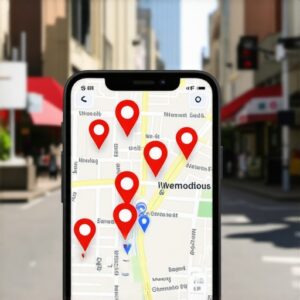
Google uses Wi-Fi triangulation, GPS latitude, and longitude signals to determine a proximity beacon for every user. Winning the map pack requires aligning your geographic centroid with the user intent radius. By using technical seo services to fix indexing and crawling issues, you ensure that search engines see your physical location data clearly. Proximity is a math problem. When a user searches for a service, Google looks at the blue dot on their phone. If your business pin is outside the immediate three mile radius, you are invisible unless your authority score is massive. This is why why your proximity signal is weak and how to strengthen it becomes a primary focus for any logistics-minded strategist. We look at the forensic trace of every check-in. If your customers are not triggering GPS signals at your storefront, Google doubts your existence. I have seen profiles get nuked because the owner was never physically at the office. The system knows. It tracks the gyroscope and the movement patterns of the manager. If you are trying to rank a fake office, the ghost in the machine will find you.
“Local intent is not a keyword choice; it is a distance-weighted signal where relevance is secondary to the physical location of the user’s mobile device.” – Map Search Fundamental
Why your physical address is a liability
A physical address acts as a static anchor that can limit your reach if your competitors are clustered in the same city center. Many high-intent leads come from service area polygons where you can hide your address to avoid proximity filters and stop losing to physical stores. Sometimes the best move is to disappear. When you hide your address, you tell Google that your service area is a broad polygon rather than a single pin. This can be the best way to recover impressions after hiding your business address especially in crowded urban centers. I once managed a fleet of locksmiths who were all competing for the same downtown centroid. By shifting to service area profiles, we expanded their reach into the suburbs where the competition was non-existent. We had to implement local seo services to fix ranking loss after moving city or service area to stabilize the leads. The logistics of a service area business require constant verification of travel patterns. If your vans are not actually moving through the zip codes you claim, your ranking will eventually fall off a cliff.
The three mile radius that determines your revenue
The geographic centroid of a city serves as the starting point for most local search results. If your business is located on the edge of town, you must build extreme local trust signals to overcome the distance penalty that Google applies to businesses far from the searcher. Distance is the ultimate ranking factor. No matter how many reviews you have, if you are ten miles away and a competitor is two miles away, you lose. This is why understanding the proximity fix for businesses located on the edge of town is vital for survival. We use local seo services to stabilize volatile map rankings after expansion when a business tries to push its reach further. You have to think about the map as a series of overlapping circles. If your circle does not touch the user, you do not exist. To fix this, we often need seo services to fix google ranking drop caused by a sudden shift in the Vicinity algorithm. The math of the map is cold. It does not care about your brand; it cares about the travel time.
Local Authority Reading List
- How we fixed a 20 position drop on Google Maps in one week
- The audit steps to find why your phone calls dropped this month
- How to prove your business is real when Google doubts your location
- Why your local rank fell off a cliff and the path to get it back
- How to beat proximity drops without moving your office
Hidden niches with zero map competition
Finding low-competition categories involves researching secondary GMB categories that high-intent users search for but competitors ignore. Using the right tool to audit your local presence reveals these gaps where phone call volume is high but the map pack is not yet saturated by spam. Most businesses just pick the obvious category. If you are a plumber, you pick plumber. But the money is in the sub-categories like grease trap cleaning or backflow testing. These are high-intent searches. We use how to audit your GMB profile like an SEO pro to find these missed opportunities. Often, a profile is held back by seo services to clean legacy black hat local seo footprints left by a previous agency. You need to scrub the data before you can rank for new categories. I have seen businesses double their call volume just by adding three specific secondary categories that their competitors forgot to list. It is about the flow of information. If the searcher wants a specific fix and you are the only one with that specific category, you win the click every time.
The JSON code that speaks to voice search
Structured data via JSON-LD LocalBusiness schema communicates your exact service area, opening hours, and department details directly to AI agents. Implementing technical seo services to fix indexing and crawling issues ensures that voice search devices like Alexa and Siri can verify your business data. AI does not look at your website; it reads your code. If your schema is messy, the AI will ignore you. We frequently provide services to fix mismatched business address and phone number because voice search requires absolute precision. If Siri sees one phone number on your site and another on your profile, it will not recommend you. We also use seo services to fix gmb profile with inconsistent opening hours history to ensure the trust score is high. An AI agent will not send a customer to a business that it thinks might be closed. The logistics of voice search are unforgiving. You must have a clean digital footprint. This includes seo services to fix toxic backlink profile because low-quality links signal to the AI that your business is not a legitimate local authority. Every data point is a coordinate in a larger map.
Restoration of the lost map visibility
Recovering from a map ranking drop requires a forensic audit of recent profile changes, algorithm updates, and competitor reporting. Using local seo services to stabilize volatile map rankings after expansion helps reclaim the top three spots by reinforcing your primary proximity signals and trust scores. When a ranking drops, most people panic. I look at the logs. Did the phone number change? Was there a business name change that triggered a filter? You might need how to salvage your ranking after a business name change if the rebranding was handled poorly. Sometimes the drop is due to external factors. We use google maps seo services for suspended profiles when the algorithm decides your location is no longer valid. The goal is to restore the flow of leads. This might involve how to fix a google business profile that wont let you post photos or fixing the fix for business listings showing up in the wrong search language. A map profile is a living thing. It needs constant maintenance. If you ignore the small glitches, the whole system will eventually fail. I treat every profile like a high-performance engine. One bad sensor can stall the whole machine. Keep the data clean and the dispatch lines open. That is how you dominate the map.