
Why You’re Losing Local Leads to Competitors Further Away: Mastering the 2026 Map Pack
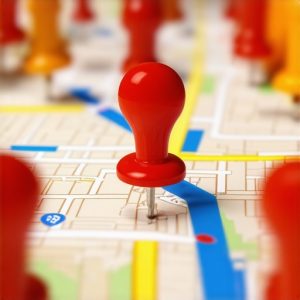
It is a scenario I see every single week as a Local SEO consultant. A business owner calls me, frustrated and confused. They are standing in their office, looking at their phone, and searching for their primary service – let’s say “plumber near me” or “personal injury lawyer.” They are physically located in the heart of the city, yet they don’t appear in the top three results of the Google Map Pack. Instead, a competitor located five, seven, or even ten miles away is sitting comfortably in that coveted top spot.
This is what I call the Proximity Paradox. Logically, you would assume that Google, a search engine built on the premise of providing the most relevant and convenient results, would prioritize the business closest to the user. However, as we move into 2026, the local search landscape has evolved. Distance is no longer the undisputed king. If you are losing leads to competitors who are further away, it is because your business is failing to satisfy the other two pillars of Google’s local algorithm: Relevance and Prominence.
In this deep dive, I will break down exactly why this “leapfrogging” happens and how you can use google business profile seo to reclaim your local territory. As a Google Business Profile Product Expert, I’ve seen the algorithm shift from a simple “who is closest” model to a complex, AI-driven “who is most trusted” model. If you want to stop the lead leak, you need to understand the mechanics of the “Trifecta.”
Decoding the Google Maps Algorithm Trifecta
According to Google’s official documentation, local results are mainly based on three factors: Relevance, Distance, and Prominence. While most business owners fixate on distance, the algorithm treats these as a weighted scale. If your competitor’s Relevance and Prominence scores are high enough, they can effectively “out-shout” your proximity advantage.
1. Relevance: The Foundation of Search Intent
Relevance is how well a local business profile matches what someone is searching for. This goes beyond just having the right business name. Google looks at your primary and secondary categories, the services you list, and even the content on your linked website. If a searcher looks for “emergency water heater repair” and your profile only mentions “plumbing,” a competitor five miles away who has specifically optimized for “emergency repair” will likely rank higher. This is where google business profile optimization becomes your most potent weapon.
2. Distance (Proximity): The Shrinking Radius
Distance is exactly what it sounds like: how far each potential search result is from the location terms used in a search. If a user doesn’t specify a location, Google calculates distance based on what it knows about the user’s location. However, in 2026, we are seeing the “3-Mile Rule” become more aggressive. Most businesses struggle to rank beyond a 3-6 mile radius unless their authority is massive. If you are within that radius and still losing, the problem lies elsewhere.
3. Prominence: The Authority Multiplier
Prominence refers to how well-known a business is. This is the factor that allows a famous law firm in the next town over to show up in your local Map Pack. Google pulls from across the web – links, articles, directories, and review counts. If you want to rank google business profile results higher than the shop next door, you must build more digital “weight” than them. For a deeper look at how these filters interact, check out 3 Proven Fixes for the 2026 Map Core Filter Ranking Drop.
Why Competitors “Leapfrog” Your Location
If you are closer to the searcher but ranked lower, you are being “leapfrogged.” This usually happens due to a few specific technical or strategic failures in your local SEO execution.
Category Dilution and Misalignment
One of the most common mistakes I see is “category stuffing.” Business owners think that by adding every possible category to their profile, they will show up for more searches. In reality, this dilutes your relevance for your primary service. Google’s AI is now sophisticated enough to spot when a profile is trying to be “everything to everyone” without having the supporting content to back it up. If your competitor has one laser-focused category and a website full of relevant blog posts, they will leapfrog you every time.
The 2026 ‘Trust Squeeze’ Filter
We are currently operating in what I call the “Trust Squeeze.” Google has become increasingly skeptical of local data due to the rise of AI-generated spam. If your NAP (Name, Address, Phone) data is inconsistent across the web, or if your business hasn’t undergone recent video verification, Google may apply a “soft filter” to your profile. This doesn’t mean you’re suspended; it just means Google doesn’t trust you enough to put you in the Top 3. You might find that Why Your Local Pin is Ghosted and the Exact Move to Bring It Back addresses this specific phenomenon of “invisible” profiles.
Review Velocity vs. Review Quality
It’s no longer just about who has the most reviews. In 2026, Google prioritizes “Review Velocity” (how frequently you get reviews) and “Review Quality” (the presence of keywords and photos in reviews). If a competitor five miles away is getting three high-quality, photo-rich reviews every week, and you haven’t had a new review in a month, Google views them as the more “active” and “prominent” choice for the user, regardless of the extra drive time. To understand how to combat these algorithmic shifts, read about Map Ranking Fixes for the 2026 ‘Trust Squeeze’ Filter.
Technical “Lead Leaks” in 2026: Semantic and AI Radius Filters
The 2026 local algorithm utilizes what we call “Semantic Sync.” This means Google is looking for a thematic match between your Google Business Profile, your website, and the real-world signals of your business. If your website doesn’t mention specific neighborhood names, landmarks, or local zip codes, you are essentially telling Google you don’t serve those areas – even if you are physically located there.
Furthermore, Google has introduced “Coordinate Drift” protection. If your “pin” location on the map doesn’t align perfectly with the location data Google sees from user smartphones (via Timeline data), your ranking will suffer. Google wants to see that people actually visit your location or that your service vehicles are actually active in the areas you claim to serve. Using local seo software like SEO Viper Tools is essential for tracking these shifts in real-time, as traditional rank trackers often miss the nuance of AI-driven radius changes.
If you feel like your rankings have suddenly vanished without explanation, you might be suffering from one of the 5 Map SEO Issues Killing Your 2026 Local Lead Generation. These technical leaks can drain your lead flow overnight, allowing competitors from further away to capture your “low hanging fruit” customers.
The Action Plan: How to Reclaim Your Territory
Dominating the Map Pack isn’t about one single “hack.” It is about a consistent, multi-layered strategy that proves to Google you are the most prominent and relevant option in your area. Follow this step-by-step plan to reclaim your leads.
1. Conduct a Deep Audit
You cannot fix what you cannot measure. Use a professional google business profile audit tool to identify where your profile is lacking. Are your images geotagged? Is your description utilizing LSI (Latent Semantic Indexing) keywords? Is your primary category the same as the competitors who are outranking you? This audit will reveal the “Relevance” gaps that are allowing competitors to leapfrog you.
2. Deploy Hyperlocal Content
To overcome the distance gap, you must prove your local authority. Create dedicated pages on your website for every suburb or neighborhood you serve. These shouldn’t be “cookie-cutter” pages. They need to include local landmarks, local reviews, and specific project details from those areas. This creates a “Semantic Sync” that tells Google your business is the authority for that specific micro-region.
3. Clean Up Your Digital Footprint
The “Trust Squeeze” is real. Ensure your business information is identical across the “Big Three” aggregators and niche-specific directories (like Avvo for lawyers or Houzz for contractors). Inconsistent phone numbers or old addresses are signals of a “low-trust” business. If you need a comprehensive strategy for this, refer to The Ultimate Guide to Fixing Google Maps Ranking Drop and Improving Visibility.
4. Aggressive Review Acquisition
Don’t just wait for reviews – engineer them. Ask your customers to mention the specific service they received and the neighborhood they live in. A review that says, “Great plumber in West End for a leaky pipe” is worth ten reviews that just say “Great job.” This feeds both the Relevance and Prominence factors of the algorithm.
5. Build Local Backlinks
Standard SEO focuses on high-authority blogs, but Local SEO thrives on local relevance. A backlink from a local Little League team, a neighborhood blog, or the local Chamber of Commerce carries more weight in the Map Pack than a backlink from a generic national site. These local signals are what truly boost your Prominence score, allowing you to rank further from your physical office.
For those who want to scale quickly, investing in a professional google maps ranking service can provide the technical edge needed to bypass the “AI Radius Filters” that are currently holding many small businesses back. You can often Stop the 2026 Lead Leak: Fix Map Rankings Without Buying Ads simply by tightening these technical parameters.
Conclusion: Proximity is the Start, Prominence is the Finish Line
In the world of 2026 Local SEO, being “close” is no longer enough to guarantee a phone call. Google’s goal is to provide the best user experience, and sometimes that means sending a customer to a business five miles away because that business has more reviews, better content, and a higher trust score than the one right around the corner.
If you are tired of watching your competitors take your leads, it is time to stop relying on your physical address and start building your digital authority. By mastering the Trifecta – Relevance, Distance, and Prominence – you can expand your ranking radius and dominate the Map Pack. Whether you choose to do it yourself using google maps ranking service tools or hire a google maps ranking expert, the time to act is now. The “Trust Squeeze” is only going to get tighter, and the businesses that adapt today will be the ones that own the local market tomorrow.