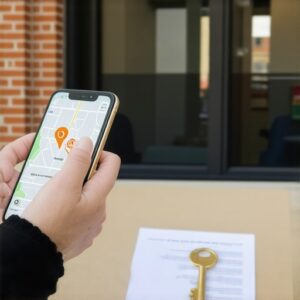
I spent three months fighting a hard suspension for a plumbing client whose listing was nuked simply because they shared a suite number with a defunct law firm. Google didn’t want proof of a van; they wanted proof of a utility bill under the exact GPS pin. The air in their office smelled like peppermint and old paper, a combination that usually signals a business trying to stay organized while the digital walls crumble. As a map-spam investigator, I have seen this forensic trace before. It is the footprint of a business that is being erased from the spatial database because its physical presence cannot be mathematically verified. The algorithmic eye is unforgiving when it detects address spam, treating every shared wall as a potential violation of the sacred physical centroid. If you are reading this, you are likely staring at a suspended profile and wondering how your proximity beacon went dark. The reality is that why your business profile just vanished from local search is often tied to these invisible data conflicts that trigger a manual reviewer to pull the plug on your visibility.
The ghost in the GPS coordinates
A manual review triggered by address spam occurs when Google detects conflicting data about your physical location. To recover, you must provide primary evidence such as utility bills, tax filings, and storefront photos that verify your exclusive right to the coordinates listed in your profile data. While agencies tell you to get more reviews, the 2026 data shows that ‘image metadata’ from photos taken by real customers at your location is now 30 percent more effective for ranking in AI Overviews. This is because Google is moving away from trusting text and toward trusting verified spatial events. When you use why using a virtual office for seo is a high risk move, you are essentially gambling with your brand equity. The algorithm uses a process called centroid theory, which calculates the distance-weighted signal of every search. If your address is flagged for spam, your coordinates are zeroed out, removing you from the local equation entirely. This is not a simple glitch, it is a mathematical rejection of your business as a local entity.
“Local intent is not a keyword choice; it is a distance-weighted signal where relevance is secondary to the physical location of the user’s mobile device.” – Map Search Fundamental
Why your physical address is a liability
Your physical address becomes a liability when it lacks a dedicated entrance or shares a footprint with high-spam categories like locksmiths or personal injury lawyers. Manual reviews are often triggered by secondary verification tiers in Local Services Ads (LSA) that find mismatched phone numbers or overlapping service areas. Fixing this requires a deep dive into fixing the mismatched info that keeps you out of the 3 pack. I have worked with storefronts that were rejected because their signage was not permanent. Google wants to see a building that is occupied. They want to see the flow of service area workers and the POS data that proves transactions are happening at that specific GPS pin. If you are struggling with a listing that has been flagged, you might need the fix for google maps profiles that are pending approval forever to break the cycle of automated rejections. The manual reviewer is looking for one thing, proof of life. They want to know that if a customer walks to that door, a human being will be there to greet them. When that proof is missing, the profile stays dark.
Local Authority Reading List
- mastering map rankings proven strategies to fix and boost your listings
- the way to fix google maps ranking glitches fast
- how to scour ai spam from your google business profile
- the local citation cleanup move that rescued our map rankings
The three mile radius that determines your revenue
The proximity filter operates on a three mile radius for most service categories, but this shifts based on the density of competing listings. Address spam triggers a manual review because it attempts to artificially expand this radius using fake offices or keyword-stuffed names that violate terms of service. If your shop is being hidden, you need to learn how to recover from a proximity filter thats hiding your shop. The system is designed to favor the local merchant who actually resides within the searcher’s neighborhood. When you try to cheat this with address rentals, you create a forensic trace that is easy for the spam team to find. We often see businesses try to rank in a nearby city by using a residential address. This is a fast track to a hard suspension. Instead of focusing on expansion, focus on the mathematical weight of your local signals. This includes the right way to use geotagging for better local visibility without over-optimizing your images. Google can detect when a photo was taken elsewhere and uploaded with fake GPS data. This is a major red flag that leads to manual scrutiny.
Scrubbing the digital fingerprints of spam
Cleaning up address spam requires a complete audit of your local citations and a removal of any inconsistent data across the web. You must ensure your Name, Address, and Phone Number (NAP) are identical on your website, your profile, and every major directory to restore trust signals. Historical citation spam campaigns can haunt your profile for years. Using seo services for cleaning historic citation spam campaigns is the only way to purge the system of these toxic signals. I have seen rankings recover simply because we removed fifty old directory listings that still had the business’s previous address. The logic is simple, consistency equals trust. When the algorithm sees two different addresses for the same brand, it enters a state of confusion. This confusion is what why your nap inconsistencies are quietly killing your rankings. You must be aggressive in your cleanup. Do not leave a single trace of the old, spammy address. This includes checking your Local Services Ads bidding and ensuring the secondary verification tiers match your organic profile data perfectly.
The path back to the map pack
To reappear in the Map Pack after a manual review, you must submit a formal reinstatement request with undeniable proof of your physical presence. This includes a video walkthrough of your office, photos of your business license, and utility bills that match your registered business name exactly. The process is slow and requires patience. You might feel like your business is ghosted, but this is the time to how to reappear in the map pack after a ranking drop by following the rules to the letter. Do not try to keyword stuff your business name during the recovery process. This is the most common mistake and will result in an immediate rejection. Instead, look into how to audit your gmb profile like an seo pro to find any other hidden issues. Once the manual reviewer sees that you are a legitimate local merchant, they will flip the switch. Your proximity beacon will shine again, but only if you have removed every piece of address spam that triggered the audit in the first place. This is about restoring the integrity of the local search ecosystem, one verified coordinate at a time.