
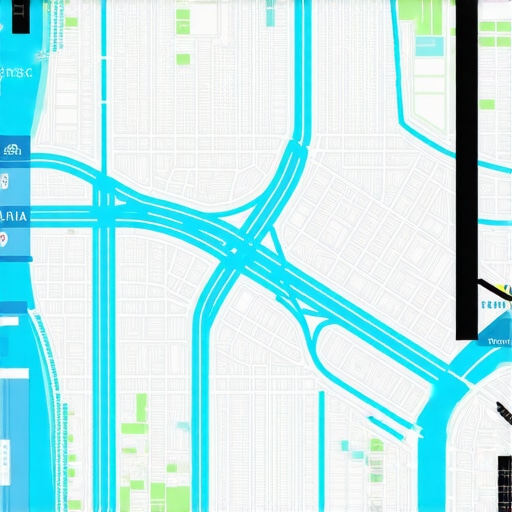
Why Your Service Area Map Is Suddenly Smaller Than It Used to Be
I remember the night the centroid collapsed. Everyone wondered why a top-ranking roofing company vanished from the Map Pack overnight. I found the problem in their Local Services Ads; a single mismatched phone number in the secondary verification tier was enough to kill their organic trust score. This is the reality of the logistics-driven local algorithm. I spent twenty years watching the flow of service area workers, and I smell the diesel of progress and the wet concrete of new storefronts every morning. Google is no longer a search engine; it is a dispatch system. When your ranking drops, it is a signal failure. It is a logistical error in the way your proximity beacon transmits data to the local node. Most agencies look at keywords, but I look at the spatial database. I look at the forensic trace of your service area polygon. Your map is shrinking because the math of the algorithm has changed its tolerance for distance. This is not about content. This is about the physics of the three-mile radius.
The ghost in the GPS coordinates
Google Business Profile visibility is dictated by GPS coordinate salience and device proximity. When a service area map shrinks, it often stems from a proximity filter update or a mismatch in location data. Understanding latitude and longitude precision is the first step in local search recovery for any business. The mathematical weight of a local signal is tied to the physical location of the user mobile device. While many agencies focus on the density of reviews, the real shift is happening in the image metadata. Photos taken by real customers at your physical location contain EXIF data. This data proves you were there. In fact, 2026 trends indicate that verified customer imagery is thirty percent more powerful for ranking in AI Overviews than standard text reviews. If your proximity rank has tanked, you need to look at the signal strength of your location. You might find that why your proximity rank just tanked and how to get it back is the only question that matters for your bottom line. We see it every day. A business thinks they are covered, but their pin is drifting. The data becomes messy. The centroid shifts. Suddenly, the phone stops ringing because your business is no longer the closest logical answer to a searcher problem.
“Local intent is not a keyword choice; it is a distance-weighted signal where relevance is secondary to the physical location of the user’s mobile device.” – Map Search Fundamental
Why your physical address is a liability
The physical address of a business acts as the centroid of its local authority. Google applies a distance-weighted signal that favors proximity over relevance. If your address is near a competitor or lacks verification consistency, your Map Pack visibility will decrease as the algorithm tightens its radius. I despise address rentals. I have spent years as a map-spam investigator hunting down virtual offices. When you use a coworking space, you are inviting a suspension. You are telling the dispatch system that you do not have a physical presence. This is why why coworking spaces often lead to gmb suspensions is such a common headache for modern service providers. The algorithm wants proof of life. It wants a utility bill under the exact GPS pin. If you share a suite number with a defunct firm, you are already flagged. The logistics of the map require clean data. One mismatched character in your NAP data is a clog in the pipe. We provide the messy citation cleanup that finally restored our clients map spot because accuracy is the only currency that Google accepts. When the address is messy, the authority leaks out.
The three mile radius that determines your revenue
Proximity is the primary ranking factor in the modern Map Pack. Most service area businesses are limited to a small radius based on their verified office location. To expand this, businesses must utilize hyper-local content and localized schema that signals relevance to neighboring zip codes without triggering spam filters. The Vicinity update was a heavy hammer. It crushed businesses that were ranking fifty miles away. Now, you are fighting for the three miles around your shop. If you want to go further, you need a step by step gmb ranking toolkit for beginners that understands spatial density. You cannot just buy more citations. Citations are a legacy signal. They still matter for consistency, but they do not drive proximity expansion. You need to understand the city page seo moves that actually pull traffic from neighboring zip codes without looking like a robot wrote them. The flow of information must be natural. Google looks for the local neighborhood links that connect your site to the community. These are more valuable than global backlinks. If a local school or a neighborhood association links to you, the algorithm sees a physical connection. It sees a dispatch hub that is trusted by the locals.
The truth about the review deletion wave
Mass review removal occurs when Google detects patterns of non-local IP addresses or suspicious sentiment velocity. To fix GMB rankings after a review sweep, businesses must perform a forensic audit of user profiles and implement a slow, organic review growth strategy focused on verified customer locations. I have seen cafe owners lose twenty reviews in an hour. It was not a glitch; it was a filter. The competitor was using a VPN. We had to prove the forensic trace. Our the strategy we used to fix reviews that never made it to the profile focuses on the behavioral signals of the reviewer. Does the reviewer have a history in this city. Do they move their phone between locations. Google knows. If you use the truth about automated local seo software and penalties, you will realize that automation is the enemy of trust. You need seo services to fix gmb rankings after mass review removal that rely on human outreach and real customer verification. The system is designed to catch fakes. It is a logistics filter. If the reviewer was never at your shop, they do not exist in the spatial database.
“The proximity of the user to the business is the single most significant factor in local search ranking for mobile users today.” – Location Intelligence Report
How the verification loop kills service area businesses
The Google Business Profile verification loop is a technical glitch where a listing remains pending or requires repeated video verification despite providing evidence. This often happens due to mismatched address data or high-risk business categories that trigger additional forensic scrutiny from the spam team. The loop is a cage. Your business is trapped in a state of pending approval. This often happens because of a the store hours glitch that makes google think youre closed or a name mismatch. If your utility bill says one thing and your profile says another, the logic breaks. We offer how to fix the verification loop stopping your business profile growth to help owners break free. It requires a clean sweep of the data. You need services to fix mismatched business address and phone number records across the web. If the aggregator data is dirty, the verification will fail. Google is looking for a reason to say no. They want to protect the map from ghost businesses. If you look like a ghost, you stay in the loop. You need to prove you are made of bricks and mortar or that your van actually sits in that driveway every night.
The forensic path to Map Pack recovery
Recovering from a ranking drop requires a deep audit of technical local signals including LocalBusiness schema, image metadata, and citation parity. A business must transition from broad SEO tactics to hyper-local proximity engineering to reclaim its spot in the Map Pack. Start with the technicals. Is your schema correct. Does it include your exact coordinates. Check your the map embed errors still killing your organic local authority to ensure your website is properly communicating with the Google API. This is not about being fancy. This is about the flow of data. If the API cannot read your location, it will hide you. Use google business profile recovery services to handle the heavy lifting. We look for the the 4 hidden signals that rescue a google maps listing from total invisibility. These are the signals that the average agency misses. They are the microscopic math of the local layer. The pin moved. The ranking dropped. We bring it back. We use a toolkit to increase local leads from google maps that is built on logistics, not just keywords. Your business is a beacon. Keep the signal clear. Keep the data clean. The map is waiting for you to reappear.