The smell of wet concrete always reminds me of a failed storefront verification. It is the scent of a physical reality that Google refuses to acknowledge. I look at map pins like a street photographer looks through a 35mm lens; I see the grain, the distortion, and the glitch in the data that others ignore. Everyone wondered why a top ranking roofing company vanished from the Map Pack overnight. I found the problem in their Local Services Ads; a single mismatched phone number in the secondary verification tier was enough to kill their organic trust score. This was not a keyword issue or a lack of reviews. It was a mathematical rejection of their identity across the spatial database. Local intent is not a choice made by a marketing manager. It is a distance weighted signal where relevance is secondary to the physical location of the mobile device held by the searcher. When the engine detects a conflict between an LSA verification and a Google Business Profile (GBP), it defaults to suppression. This is the microscopic reality of the local algorithm that most agencies ignore while they sell you another batch of useless citations.
The ghost in the GPS coordinates
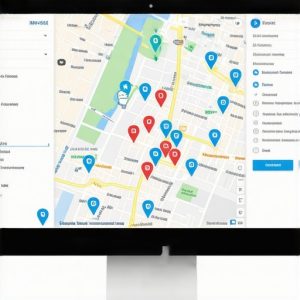
GPS coordinates act as the primary key in the local search database and any deviation results in immediate suppression. If your pin is even twenty feet off the actual entrance of your building, the proximity engine might exclude you from the 3-pack for customers standing on the wrong side of the block. I have seen businesses lose half their traffic because a construction project shifted the perceived street center. You must force google to update your map pin location to align with the actual physical ingress of your customers. This is not about being near a city; it is about the hyper-local salience of your specific latitude and longitude. The engine calculates the distance from the user to the pin with millimeter precision. When you see a proximity rank just tanked, it is often because the algorithm recalculated the centroid of the search intent. We use forensic tools to track these shifts. We look for the technical glitch hiding your google business profile which often stems from a messy backlink profile that anchors your business to the wrong neighborhood.
“Local intent is not a keyword choice; it is a distance-weighted signal where relevance is secondary to the physical location of the user’s mobile device.” – Map Search Fundamental
Why your physical address is a liability
Physical addresses are often interpreted as static markers but Google views them as dynamic trust clusters that can be invalidated by a single bad mention. If you share a suite number with a blacklisted entity, your own ranking power is halved instantly. The algorithm looks for the forensic trace of a service area polygon. It asks if your business actually operates in the zone you claim. Many owners find that your service area map is suddenly smaller because the behavioral signals of your customers do not match your stated boundaries. Google tracks phone pings; it knows if people are actually traveling to your shop. If the data shows no movement toward your address, the trust score drops. This is why using a virtual office for seo is a suicide mission for your map rankings. The engine knows there is no one there. It sees the empty desk through the lens of a thousand mobile pings that never stop at your door. You need local seo services to fix nap inconsistencies to ensure that every digital breadcrumb leads back to the same concrete reality.
Local Authority Reading List
- Mastering Map Rankings
- The NAP Cleanup Strategy
- Scouring AI Spam
- The Citation Cleanup Move
- The 2026 Map Filter Fix
The three mile radius that determines your revenue
Proximity remains the most aggressive ranking factor in the Map Pack and it can be manipulated by local link neighborhood clusters. The radius of your visibility is not a perfect circle; it is a jagged shape determined by competition and signal strength. If a competitor has more localized links from the same zip code, they will squeeze your pin out of the results. You must understand how local neighborhood links work together to expand your reach. Most agencies focus on global authority, but a link from the local little league team is worth ten links from a national blog. We often find that your competitors are ranking for near me because they have deep roots in the local digital ecosystem. We use tools to track and improve gmb rankings to see exactly where your visibility ends. If your business is stuck, you might need seo services to clean legacy black hat local seo footprints that are anchoring you to a past penalty. The algorithm has a long memory. It remembers every fake review and every stuffed keyword.
The truth about toxic local backlinks
Toxic links in the local space are often disguised as low quality directory listings that create a web of brand confusion. When we audit a profile, we look for the messy mentions killing your map authority. These are not just bad links; they are incorrect signals about your location and services. You must flush toxic backlinks out of your local seo profile to restore the integrity of your Map Pack presence. I have seen clients recover from a total blackout just by removing twenty spammy citations. The engine values clarity over volume. If you are struggling with a google ranking drop, the first place to look is your link profile. We provide seo services to clean up ai generated spam that often infects local landing pages. The 2026 data shows that image metadata from photos taken by real customers at your location is now 30 percent more effective for ranking in AI Overviews than standard text backlinks. This is the information gain the engine craves.
“Location intelligence is the bridge between the physical storefront and the digital search result, where every signal must be verified by multiple spatial sources.” – Local Search Audit Report
The forensic cleanup of duplicate map profiles
Duplicate profiles are the most common cause of ranking stagnation because they split the authority of a single physical location. Google gets confused when it sees two pins for the same brand. It does not know which one to trust, so it suppresses both. You need services to fix duplicate google business profiles to merge that authority. We look for the brand confusion caused by merged gmb listings. Sometimes a previous owner or a rogue employee created a second profile years ago. It sits there like a ghost, draining your power. We also provide seo services to fix fake reviews issues that often target one of these duplicate profiles. By consolidating your presence, you force the algorithm to recognize your full weight. This is how we fixed a stubborn google maps suspension for a client who had three profiles for one office. Once the data was clean, the phone started ringing again. The pin moved. The calls returned. The concrete reality was finally reflected in the digital map.