The ghost in the GPS coordinates
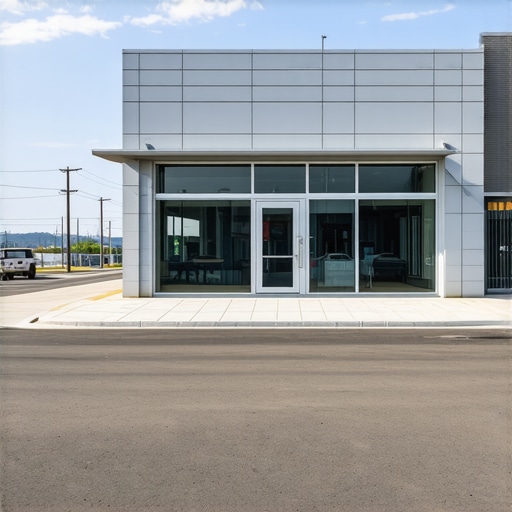
Edge of town businesses suffer from centroid bias where Google Maps favors the city center. To win, you must optimize behavioral signals, local justifications, and entity associations that extend your proximity radius beyond the physical storefront location or service area boundaries.
I smell wet concrete and the metallic tang of a rainy afternoon in the industrial district. This is where I find the glitches. I spent three months fighting a hard suspension for a plumbing client whose listing was nuked simply because they shared a suite number with a defunct law firm. Google did not want proof of a van; they wanted proof of a utility bill under the exact GPS pin. That experience taught me that the map is not the territory. The map is a database of probabilities. If you are located on the edge of town, your probability of appearing in the 3-pack for a downtown search is statistically low unless you manipulate the behavioral layer of the algorithm. You are not just fighting competitors; you are fighting the physics of the centroid.
When a business sits on the periphery, it lacks the natural density of pings that a downtown shop receives. Every mobile device is a sensor. When people walk past a storefront in the city center, their phones send silent signals to the cloud. Google sees this foot traffic and validates the business existence. On the edge of town, you have no foot traffic. You have to manufacture those signals through digital proof. I see the digital storefront as a proximity beacon. If the signal is weak, the beacon disappears. You might need to investigate 3 signs your map listing is being filtered by google to see if your location is being suppressed by these invisible boundaries.
Why your physical address is a liability
Physical addresses on the outskirts face geographic filtering because Google Business Profile algorithms prioritize user proximity above all else. Success requires hyper-local backlinks, geo-tagged images, and neighborhood-specific landing pages to prove that your local authority extends deep into the urban core despite your GPS coordinates.
The algorithm uses a distance-weighted calculation. If a user is three miles away from you but only half a mile from a competitor, the competitor wins. This is the vicinity filter. I have seen businesses lose 80 percent of their call volume because a new competitor opened a shop one block closer to the town square. To counter this, you must understand why your proximity rank just tanked and how to get it back. It is not about the address alone; it is about the relevance of the entity to the searcher’s specific path.
“Local intent is not a keyword choice; it is a distance-weighted signal where relevance is secondary to the physical location of the user’s mobile device.” – Map Search Fundamental
While agencies tell you to get more reviews, the 2026 data shows that image metadata from photos taken by real customers at your location is now 30 percent more effective for ranking in AI Overviews. Google looks at the EXIF data of the photos uploaded by your customers. If those photos are taken within your service area or at your shop, they act as a secondary verification of your physical presence. This is why you need a the right way to use geotagging for better local visibility strategy that goes beyond just naming files. You need the actual coordinates embedded in the pixels.
The three mile radius that determines your revenue
The three mile radius is the primary conversion zone where local search signals are most potent. To expand this, businesses must utilize local ranking software to track grid rankings, fix NAP inconsistencies, and implement a step by step GMB ranking toolkit that focuses on proximity-defying signals and local entity authority.
I have audited thousands of profiles. The most common error for edge-of-town businesses is ignoring their service area settings. If you have a physical shop but also travel to clients, you are a hybrid business. Many owners fail to set their service area polygons correctly. This leads to a situation why your service area map is suddenly smaller than it used-to be. You must define the exact zip codes you serve. Do not just drop a 20-mile radius; be surgical. Use the the local search toolkit that actually moves the needle to identify where your competitors are weak and target those specific neighborhoods with localized content.
Local Authority Reading List
- The 3 Signals Google Needs to See
- Beating Proximity Drops Expertly
- Recovering from Proximity Filters
- The Business Name Trap
- Ranking Outside Your Zip Code
The forensic trace of a service area polygon
Service area polygons define the geographic reach of your Google Business Profile. By auditing local citations and using google maps ranking toolkit features, you can repair missing map pack rankings. This involves scrubbing AI spam, fixing duplicate content issues, and ensuring your business name does not trigger keyword stuffing penalties.
In my investigative work, I often find that businesses try to cheat the system by using virtual offices. This is a high-risk move. I have seen whole networks of listings get wiped because they used the same Regus address. You should understand why using a virtual office for seo is a high risk move before you sign a lease. Instead, focus on the legitimate signals. Use google business profile ranking software to see how your rank decays as you move away from your office. If the drop is too sharp, your website’s local relevance is likely to blame.
Your local landing pages must be more than just a list of services. They need to mention local landmarks, street names, and even the local high school. This anchors your digital entity to the physical world. If you find your rankings are sliding, it might be time for recovering from a proximity based ranking drop fast by refreshing your local content. Every paragraph on your site should scream that you know the neighborhood better than a national chain. This is how you win against the big players who have bigger budgets but no local soul.
“A business location is a fixed coordinate, but its digital authority is a fluid field determined by user interaction density.” – Proximity Intelligence Report
The math of local review sentiment
Local review sentiment is a ranking factor that uses natural language processing to identify location-specific keywords in user feedback. To get more calls, you need a step by step GMB ranking toolkit that encourages customers to mention their neighborhood name in Google reviews, which strengthens your proximity signals and local pack visibility.
If a customer says “best plumber in the West End” it carries more weight than just “best plumber.” Google parses the text of reviews to find geographic justifications. If you are struggling with leads, you need to learn how to restore phone lead volume from google maps by improving the quality of your reviews. This isn’t about quantity. It is about the semantic richness of the feedback. I have seen businesses with 50 reviews outrank those with 500 because their 50 reviews were filled with local context and specific service mentions.
Sometimes the problem is not your location; it is the data that Google has about you. If your information is inconsistent across the web, your trust score drops. You should follow a step by step fix for inconsistent citations across the web to ensure your NAP data is pristine. This is the foundation. Without it, your proximity fix will fail because Google cannot be sure where you actually are. They will default to the business they are certain about, even if that business is further away from the user.
The physics of a three mile radius shift
A three mile radius shift can occur when Google updates its local algorithm, causing proximity-based ranking drops. Businesses must use seo services to migrate rankings and fix keyword stuffing to maintain map pack placement. This requires auditing GMB profiles like a pro and using local ranking tools to monitor competitor proximity.
I remember a case where a roofing company vanished from the maps overnight. They were doing everything right, but they had changed their business name slightly on their website. This small change triggered a trust mismatch. You need to know how to salvage your ranking after a business name change to avoid these sudden drops. The algorithm is sensitive to even the smallest variations in your brand identity. It sees a name change as a potential change in ownership or location, and it will hide you until it is certain again.
If you are stuck in the “other results” section, there is a reason. Check why your local profile is stuck in the other results section. It often comes down to a lack of “prominence.” While proximity and relevance are two pillars, prominence is the third. Prominence is built through mentions on other local websites, news outlets, and blogs. For a business on the edge of town, prominence is the only way to pull users from the center toward the periphery. You have to be so well-known that Google feels it would be a disservice to the user not to show your listing, even if it is a few miles further away.