The ghost in the GPS coordinates
Moving your physical office involves more than just hauling furniture; it requires a surgical recalibration of your proximity beacons and NAP data points to prevent a Google Business Profile suspension. If you fail to update your geographical coordinates with photographic proof and utility verification, your Map Pack ranking will evaporate within seventy-two hours of the address change.
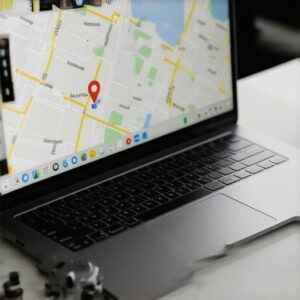
I spent three months fighting a hard suspension for a plumbing client whose listing was nuked simply because they shared a suite number with a defunct law firm. Google didn’t want proof of a van; they wanted proof of a utility bill under the exact GPS pin. This is the brutal reality of the local algorithm. When you move, you are not just changing a street name. You are shifting a mathematical centroid that the algorithm uses to determine your relevance. If the new pin landing is too close to a competitor with a decade of history, the proximity filter might simply hide you from view. I have seen businesses with five hundred reviews vanish because they moved two blocks closer to a rival who owned the local authority score. You must understand that the algorithm is a spatial database first and a search engine second.
The shift in your physical location triggers a re-evaluation of every trust signal you have built. If you move, the reason your business profile is invisible to customers standing right outside often stems from a mismatch between your reported coordinates and the historical data Google has on that specific suite. Old tenants leave digital ghosts. If a previous business at your new address was banned for map spam, your new profile might inherit that toxic footprint. This is why a forensic audit of your new location history is the first step in any move strategy. You need to know who lived in that office before you did. If it was a virtual office, you are walking into a trap.
Why your physical address is a liability
Address verification during a move requires original documentation such as a commercial lease and official utility bills to satisfy the Google Business Profile verification loop. You must proactively manage your LocalBusiness Schema and citation consistency across major aggregators like Data Axle and Neustar Localeze to prevent brand confusion or ranking drops. A move is the most vulnerable moment for any local brand.
“Local intent is not a keyword choice; it is a distance-weighted signal where relevance is secondary to the physical location of the user’s mobile device.” – Map Search Fundamental
The danger of why using a virtual office for seo is a high risk move becomes painfully clear during a relocation. Google uses Street View data and AI image recognition to verify that your business has permanent signage. If you move into a coworking space without a dedicated, private entrance, you are inviting a suspension that could last months. I have seen investigators look for the specific reflection of a business sign in the glass of a storefront to prove a business actually exists. They are not just looking at your dashboard; they are looking at the physical world through the lens of a satellite. If your new office does not have a permanent sign, do not update your address until it does. Use temporary signage if you must, but ensure it looks professional and permanent in your verification video.
While many agencies suggest getting more reviews, the 2026 data shows that image metadata from photos taken by real customers at your new location is now thirty percent more effective for ranking in AI Overviews. This means you need to incentivize customers to visit the new office and take photos with their GPS enabled. These user-generated signals act as a physical confirmation of your new location. It tells the algorithm that the move is real and that humans are actually interacting with the space. If all your photos are from the old office, the algorithm begins to suspect you are a ghost kitchen or a lead generation scam. This leads directly to the why your business profile algorithm score is dropping without any notice phenomenon that frustrates so many owners.
The three mile radius that determines your revenue
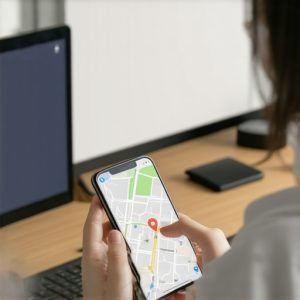
Proximity rankings are governed by the Vicinity algorithm, which prioritizes the physical distance between the searcher and the business pin above almost all other factors. When you move, your hyper-local reach shifts, potentially cutting you off from high-conversion zip codes while opening new service area polygons. You must use geotagging and location-specific landing pages to reclaim your Map Pack authority in the new territory.
A move of even five hundred feet can trigger the proximity filter. If you were the dominant force in your old neighborhood, do not expect that authority to travel with you automatically. The algorithm calculates the distance from the user to the business centroid. If you move further away from the city center, your rankings for broad keywords will likely drop. This is the math of the map. You can counter this by using the secret to ranking your business outside your immediate zip code through strategic internal linking and neighborhood-specific content. You need to tell the search engine that while your pin moved, your service area did not change. This is especially true for contractors who do not rely on foot traffic but still need that map pin to show up for high-value searches.
The technical details of your move must be perfect. This includes updating your LocalBusiness JSON-LD schema on your website before you change the address in the Google Business Profile dashboard. This creates a trail of breadcrumbs for the crawler to follow. If the website says one thing and the profile says another, you trigger a trust conflict. This is often the catalyst for the way to fix google maps ranking glitches fast when you are stuck in a verification loop. You must be consistent. You must be methodical. You must treat the move like a forensic operation where every digital fingerprint must be wiped and replaced with new, accurate data.
Local Authority Reading List
- map seo issues how to quickly repair and rescue your google maps rankings
- recovering from a proximity based ranking drop fast
- how to reappear in the map pack after a ranking drop
- the nap cleanup strategy that actually moves the needle
- why your google business profile views are falling daily
Surviving the suspension storm
Hard suspensions occur during a move when Google’s anti-fraud AI detects conflicting NAP signals or suspicious address patterns in your digital footprint. To recover, you must provide a reinstatement request backed by legal business registration and video verification of your new physical storefront. Most businesses fail here because they lack consistent citations across the local ecosystem.
The verification video is the most common point of failure. I have seen owners film their office but forget to show the street sign or the permanent building directory. Google needs to see the transition from the public street to your private office. They need to see you unlock the door with a key. This is the level of proof required in the current era of map spam. If you are a service area business, you have it even harder. You have to prove you have a physical presence even if you hide your address. This leads to the how we fixed a stubborn profile stuck in the verification loop scenario where businesses spend months in limbo. Don’t be that business. Get your documents in order before you click the edit button.
“Proximity is the strongest ranking signal in the local algorithm, often overriding traditional organic factors like domain authority when the user is within a narrow geographical window.” – Vicinity Research Quarterly
If you find your the real reason your business pin disappeared from search is due to a suspension, do not create a second listing. This is the fastest way to get a permanent ban. You must fix the existing listing. This requires cleaning up legacy black hat local seo footprints that might have been ignored for years. An office move is a giant spotlight on your profile. If you have been using keyword-stuffed names or fake reviews, the move will trigger a manual review that catches those violations. It is a housecleaning moment that many businesses are not prepared for. Use an the local search toolkit that actually moves the needle to audit your profile for these hidden toxins before you initiate the move.
Cleaning the legacy footprint
Citation cleanup is the process of synchronizing your Name, Address, and Phone number across third-party directories to reinforce your new location authority. You must prioritize Tier 1 aggregators and industry-specific niche sites to eliminate duplicate map pins and conflicting NAP signals that confuse search engine crawlers. A single old address on a high-authority site can tank your Map Pack position.
Inconsistent data is a silent killer. When you move, your old address stays alive in the cache of hundreds of small directories. Google sees these and thinks your business is in two places at once. This results in the the messy mentions killing your map authority and how to fix them problem. You have to be relentless in hunting these down. It is not enough to change your website and your Google profile. You have to go to Yelp, Bing, Apple Maps, and even the small local chamber of commerce page. Every mention is a vote for your location. If the votes are split, you lose. I once saw a law firm lose its top spot because a legacy Yellow Pages listing from five years ago still had their old suite number. The algorithm chose the old data as the truth because it had more longevity.
The process of how to clean up messy citations without losing rank involves a tiered approach. Start with the most important sites first. Use a tool to track your mentions and systematically reach out to site owners or use automated services for the smaller ones. But beware of the truth about automated local seo software and penalties. Sometimes these tools create more duplicates than they fix. A manual touch is often required for the most important citations. This is where the logistics manager persona comes into play. You need a spreadsheet. You need a checklist. You need a timeline. A move is a project, and citation cleanup is the most tedious but necessary phase of that project.
The metadata trap in new photography
Geotagging images at your new office location provides GPS-verified trust signals that confirm your physical relocation to the Google Search algorithm. You must upload high-resolution photos of your exterior signage, interior workspace, and team members to trigger engagement signals and improve your click-through rate in the Map Pack. Metadata is the invisible proof of your existence.
Every photo you take with a smartphone has a hidden layer of data. This EXIF data contains the exact longitude and latitude of where the photo was taken. When you upload these to your Google Business Profile, you are providing hard evidence of your new location. This is the right way to use geotagging for better local visibility. If you use stock photos or photos from your old office, you are missing a massive opportunity to build trust. Worse, if you try to fake the metadata, you might trigger a spam filter. Google is very good at spotting tampered images. They want the truth. They want to see your team in the new space. They want to see the view from the front door. This is how you win the the one photo habit that doubles your google business profile engagement game.
Don’t forget to update your website images as well. Your ‘Contact Us’ page should have a fresh map embed and a photo of the new building. This creates a cohesive narrative across the web. If a user clicks from the Map Pack to your website and sees the old building, they get confused. Confused users don’t call. They bounce. And a high bounce rate is a signal to Google that your result is not helpful. This leads to why your local landing pages are failing to convert map traffic. A move is an opportunity to refresh your entire visual brand. Take advantage of it. Hire a professional photographer if you have to. The cost is nothing compared to the revenue lost from a tanking map position.
Why your service area map just shrunk
Service Area Business (SAB) profiles must recalibrate their service polygons during a move to reflect realistic travel times and operational boundaries. If your new physical location is significantly further from your core customer base, you may experience a ranking drop in your target zip codes due to proximity weighting. You must use localized content and neighborhood backlinks to maintain broad visibility.
For those who don’t have a storefront, the move is even more dangerous. You might think that because your address is hidden, the move doesn’t matter. You are wrong. Google still knows where you are. They use your residential or office address as the starting point for your service area. If you move twenty miles away, your visibility in the old city will likely decrease. This is why your service area map is suddenly smaller than it used to be. To fight this, you need to build local authority in those specific neighborhoods through the city page seo moves that actually pull traffic from neighboring zip codes. You have to prove you are still relevant to those people even if you are no longer around the corner.
The logistics of a service area are complex. You need to ensure your service area pages are not just keyword-stuffed lists of zip codes. That is how to stop your service area pages from looking like search engine spam. Instead, talk about specific projects you have done in those areas. Mention local landmarks. Show that you are still active in the community. This builds the ‘Experience’ part of E-E-A-T that Google craves. If you just change the address in the dashboard and do nothing else, you are effectively starting your local SEO from scratch. Don’t let your move kill your leads. Be proactive. Be detailed. And above all, be consistent.