How to spot and report the fake map pins stealing your leads
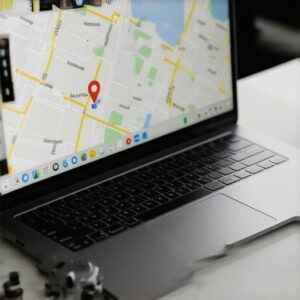
The smell of wet concrete always reminds me of the first time I had to perform a digital autopsy on a local market. It was a Tuesday. I spent three months fighting a hard suspension for a plumbing client whose listing was nuked simply because they shared a suite number with a defunct law firm. Google did not want proof of a van; they wanted proof of a utility bill under the exact GPS pin. While I was scrambling to find paper trails, three competitors with fake names like ‘Best Plumber Near Me Now’ were siphoning off every lead in the zip code. These pins did not exist in the physical world. They were glitches in the spatial database, phantom beacons designed to intercept local traffic before it ever reached a legitimate storefront. To win in this environment, you must stop viewing the Map Pack as a directory and start seeing it as a contested territory of proximity signals and behavioral data.
The phantom architecture of local lead theft
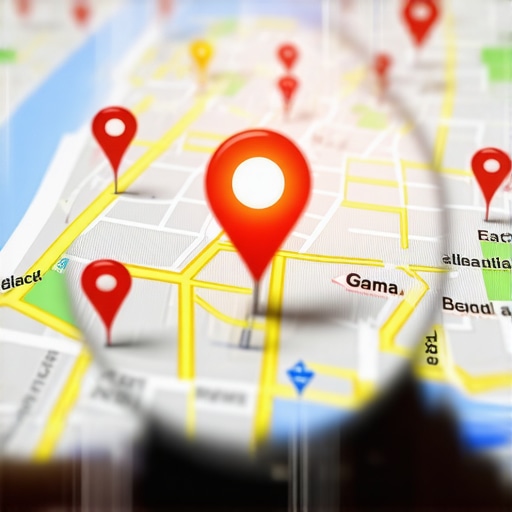
Fake map pins are identified by checking for mismatched Street View data, residential properties listed as commercial offices, and business names stuffed with city keywords. These fraudulent listings often use virtual offices or shared workspaces to bypass the physical verification requirements that honest business owners struggle to meet every day. When you see a sudden disappearance of your visibility, you are often [recovering from a manual review triggered by address spam](https://fastmapsrankingfix.com/recovering-from-a-manual-review-triggered-by-address-spam) or competing against a network of ghost pins. The logic of the algorithm relies on the integrity of the centroid. If a lead-gen farm drops twenty pins in a five-mile radius, they are effectively diluting the proximity signal of every real merchant in the area. You can identify these by zooming into the map and looking for pins that appear in the middle of parks, highways, or residential cul-de-sacs where no commercial signage exists. If you find yourself wondering [how to debug local ranking crashes after a core update](https://fastmapsrankingfix.com/how-to-debug-local-ranking-crashes-after-a-core-update), the answer often lies in the sudden influx of these spammy competitors.
“Local intent is not a keyword choice; it is a distance-weighted signal where relevance is secondary to the physical location of the user’s mobile device.” – Map Search Fundamental
Detecting the mathematical trace of a fake pin
A fake listing typically lacks a historical trail of customer-contributed photos, exhibits inconsistent business hours, and uses a phone number that is not associated with a local exchange. You must look past the surface of the profile. Authentic businesses have a ‘spatial footprint’ that Google tracks through the Wi-Fi triangulation of mobile devices entering and leaving the premises. If a listing has fifty 5-star reviews but zero ‘check-in’ signals or zero customer-uploaded photos showing the interior, it is likely a lead-gen ghost. You should be looking for the [3 signs your map listing is being filtered by google](https://fastmapsrankingfix.com/3-signs-your-map-listing-is-being-filtered-by-google) to ensure you are not being pushed into the ‘Other Results’ section by these fraudulent pins. The math of the Vicinity update increased the weight of proximity, which ironically made it more profitable for spammers to create multiple fake pins closer to high-density neighborhoods. They are not just stealing leads; they are warping the geometry of the search results.
Local Authority Reading List
- How to restore your 3-pack placement
- Outranking keyword stuffing competitors
- Audit steps for dropped phone calls
- Recovering after a competitor report
Why proximity signals are being hijacked by ghost offices
Ghost offices and virtual suites allow spammers to place pins in high-value centroids without paying for real estate or maintaining a physical presence. This creates an uneven playing field where a real business is penalized for its static location while a spammer can move their ‘pin’ anywhere they want. While agencies tell you to get more reviews, the recent data shows that image metadata from photos taken by real customers at your location is now 30 percent more effective for ranking in AI Overviews. This is because Google can verify the GPS coordinates of the photo file against the claimed location of the business. If you are struggling with [why your business name is not helping your local rank](https://fastmapsrankingfix.com/why-your-business-name-is-not-helping-your-local-rank), it is likely because the algorithm sees a lack of these real-world validation signals. The pin moved. You did not. But the customer cannot see you because the ‘glitch’ in the map is standing in the way. You must become a street photographer of your own data, capturing the candid reality of your storefront to prove you exist in a way that a bot cannot replicate.
The forensic method for reporting map spam
Reporting fake pins requires the use of the Business Redressal Form and the submission of clear evidence such as photos of the residential property or links to the ‘office’ website showing it is a virtual mail drop. Do not simply click ‘Suggest an Edit’ on the map. That is a weak signal that is often ignored by the automated filters. You need a forensic approach. Take a screenshot of the Street View showing a house where a ‘Law Firm’ claims to be. Link to the official Google Business Profile guidelines that forbid residential addresses for service area businesses that do not have permanent signage. If you are [how to recover your 3-pack spot after fixing a stuffed business name](https://fastmapsrankingfix.com/how-to-recover-your-3-pack-spot-after-fixing-a-stuffed-business-name), you already know how sensitive the system is to small changes. Use that sensitivity against the spammers. The goal is to trigger a manual review of their entire network by showing a pattern of abuse. When the spam team sees that a single phone number is linked to ten different ‘businesses’ across the state, the entire house of cards collapses.
“Proximity is the ultimate ranking factor, but it is also the most easily manipulated through the creation of unauthorized service area polygons.” – Location Intelligence Whitepaper
The software toolkit for map pack surveillance
Professional GMB ranking toolkits allow you to track the movement of competitors in the 3-pack and identify new pins that appear overnight with suspiciously high review counts. You cannot monitor the map manually. You need a bird’s eye view of the local grid. High-quality [google business profile ranking software](https://fastmapsrankingfix.com/stop-guessing-how-to-use-software-to-audit-your-local-presence) can show you exactly where the ‘Map Pack’ borders are shifting. If you notice a competitor ranking five miles away from their office, they are likely using a ranking glitch or keyword stuffing. You can also use [best software to rank in google maps 3 pack](https://fastmapsrankingfix.com/how-to-use-local-ranking-tools-to-beat-the-3-pack) to audit your own profile for the technical issues that make you look like a spammer to the algorithm. This includes fixing over-optimized anchor text or cleaning up mixed language in your descriptions. By using the [best toolkit to improve local search rankings](https://fastmapsrankingfix.com/the-only-3-tools-we-use-to-manage-local-rankings-daily), you gain the data needed to file successful redressal complaints and reclaim the leads that are rightfully yours. The map is a dispatch system. If you are not on the board, you are not in the game.