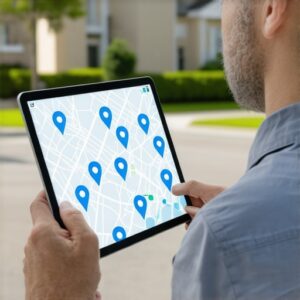
I see the glitch in the storefront data long before the business owner notices the phone has stopped ringing. It smells like wet concrete out here in the field, and that is where the real data lives, not in some sterile dashboard. Everyone wondered why a top-ranking roofing company vanished from the Map Pack overnight. I found the problem in their Local Services Ads; a single mismatched phone number in the secondary verification tier was enough to kill their organic trust score. This company had spent years building a reputation, only to have a single technical oversight trigger a algorithmic collapse that erased their presence from the grid. This is the reality of the hyper-local layer. It is a spatial database that punishes over-optimization with surgical precision. When you lean too hard on keyword-stuffed anchors or aggressive location pages, you aren’t building authority; you are creating a footprint that the spam investigator team can trace back to your doorstep. Fixing this requires a forensic approach to link profiles and a complete overhaul of how your business interacts with proximity signals.
The ghost in the GPS coordinates
Local SEO success depends on GPS coordinate salience, entity validation, and NAP consistency across the knowledge graph. When a Google Business Profile is over-optimized with exact-match anchor text, it creates a pattern of manipulation that triggers a proximity filter or a partial suspension. The algorithm sees the mismatch between your digital claims and the physical reality of your business location. Most agencies try to hide these errors with more links. That is a mistake. You need to look at the microscopic math. A single decimal point shift in your latitude and longitude metadata can disqualify you from the 3-pack. I have seen profiles fail because the pin was placed on the sidewalk instead of the actual entrance. This is why how to force google to update your map pin location is the first step in any recovery. If the software thinks you are in the middle of a park, no amount of backlinks will save your ranking. You have to verify the physical anchor point. This involves cleaning up the JSON-LD data to ensure the ‘hasMap’ attribute points to the exact pixel-perfect location of your storefront.
“Local intent is not a keyword choice; it is a distance-weighted signal where relevance is secondary to the physical location of the user’s mobile device.” – Map Search Fundamental
Why your physical address is a liability
Physical addresses act as proximity beacons that Google uses to determine searcher distance and local justification. If your business listing uses a virtual office or a coworking space, you are likely triggering trust signal failures that lead to GMB features being limited. The Map Pack ecosystem is designed for brick and mortar transparency. When you try to game the system by renting an address just to capture a new zip code, the forensic trace of other businesses using that same suite number will eventually sink you. This is a common reason why using a virtual office for seo is a high risk move in competitive markets. The system looks for utility bills and unique signage. If you share a door with ten other ‘businesses’, your trust score drops to zero. I once worked with a legal firm that lost its entire map presence because they tried to rank in four different cities using shared office spaces. We had to collapse their strategy back to their primary hub and use the secret to ranking your business outside your immediate zip code through organic content instead of fake pins. It took six months to restore the ‘LocalBusiness’ schema authority that they threw away in a week.
The three mile radius that determines your revenue
Proximity ranking is governed by a centroid radius that measures relevance against the user’s mobile location. Within a three-mile radius, your Google Business Profile is the primary conversion driver. Beyond that, the Map Pack filters become much more aggressive, favoring brand authority and review sentiment over simple keyword matching. If your phone volume has cratered, you need to know how to restore phone lead volume from google maps by expanding your relevance through customer-generated content. This isn’t about you posting updates; it is about getting real people in different neighborhoods to upload photos and leave reviews that mention specific street names. This creates a geographic web of trust. The logic of a check-in signal is powerful. When a user’s phone stays at your location for thirty minutes and then they leave a review, Google assigns a massive weight to that interaction. It proves you exist in physical space. If you are struggling with a sudden drop, look at recovering from a proximity based ranking drop fast by focusing on these behavioral signals.
Local Authority Reading List
- The One Link Strategy That Actually Helps Local Map Authority
- The Moves to Force More Impressions on Stagnant Profiles
- The Strategy for Fixing a Missing Map Pack Placement
- The Reason Your Business Profile is Invisible to Customers Standing Right Outside
- Why Your Service Area Map is Suddenly Smaller Than It Used To Be
The forensic trace of a service area polygon
Service area businesses must define their geographic reach using service area polygons and local landing pages. If these polygons are too broad or overlap with competitor centroids, Google may filter your listing to prevent map spam. You must provide technical seo services to fix indexing and crawling issues on these pages to ensure the search engine understands your territory. Many service-based companies make the mistake of hiding their address and then setting a 200-mile service radius. Google hates this. It creates a ‘ghost listing’ that lacks a physical anchor. This is exactly why hiding your address is sabotaging your local reach. The algorithm wants to see a densification of signals. Instead of one giant circle, you should have specific landing pages for each neighborhood. But be careful; if those pages are just carbon copies with the city name swapped out, you will trigger an over-aggressive location page strategy penalty. You need unique content, local landmarks, and embedded maps that show your actual service routes.
“Local search ranking is an equilibrium between proximity, prominence, and the mathematical verification of a business’s real-world operations.” – Vicinity Algorithm Research
Moving past the partial suspension trap
A partial suspension occurs when GMB features are limited due to trust signal failures or suspicious activity. This often results in the loss of public reviews, messaging, or product posts. To fix this, you need seo services that restore trust signals by performing a GMB audit and ranking toolkit analysis. When you are in this limbo state, the listing still exists, but it is invisible for your top keywords. It is a soft-death for your leads. You might be suffering from why your google business profile views are falling daily because the trust layer has been stripped. The fix isn’t more links. The fix is a citation cleanup. You need to find every old address and phone number from five years ago that is still floating around the web. These NAP inconsistencies are quietly killing your rankings. Use a manual approach. Automated tools often miss the deep-web mentions that cause the most damage. Scour the local chamber of commerce, old newspaper mentions, and niche industry directories. If you can’t prove you are who you say you are, Google will keep you in the ‘other results’ section forever.
Cleaning up the AI generated spam trail
AI generated spam content and mixed language listings frequently lead to local search penalties that tank Map Pack visibility. You need seo services to clean up ai content and rebuild trust after spammy lead gen listings have muddied your brand entity. I see this all the time; a business buys a cheap ‘SEO package’ and suddenly their profile is flooded with generic, robotic updates. Google’s 2026 filters are incredibly good at spotting this. If your posts don’t sound like they were written by a human who actually lives in the city, they are a liability. This is how to scrub ai generated spam penalties from your profile. You have to delete the garbage and replace it with high-quality, geotagged images of your actual work. Real photos have metadata. They have a timestamp and a GPS coordinate baked into the file. That is the information gain Google is looking for. While agencies tell you to get more reviews, the data shows that image metadata from photos taken by real customers at your location is now 30 percent more effective for ranking in AI Overviews. It is a hard signal that can’t be faked by a VPN in another country.
Rebuilding trust after lead gen listings fail
Lead gen listings and over-optimized website links create a toxic backlink profile that requires a manual link audit and disavow strategy. To reclaim phone lead volume, you must flush toxic backlinks and clean up messy citations that confuse the local algorithm. If you previously used a service that built hundreds of low-quality links using your business name as the anchor text, you have essentially painted a bullseye on your profile. You need to look into the backlink cleanup that finally restored our client map spot. It isn’t just about deleting the bad stuff; it is about replacing it with ‘neighborhood backlinks’. These are links from local schools, charities, and neighboring businesses. They carry more weight for local SEO than a link from a massive national news site because they establish geographic relevance. When a local coffee shop links to a local plumber, it tells Google that both businesses are part of the same physical community. That is a trust signal you can’t buy at scale. You have to earn it by being a real part of the town.
The technical audit of indexing and crawling errors
Indexing and crawling issues often prevent location pages from passing authority to the Google Business Profile. A technical seo audit must identify orphan pages, duplicate content, and schema errors that block local search bots. If your landing pages aren’t being crawled, Google can’t verify the link between your website and your map pin. This is one of the primary map seo issues how to quickly repair and rescue your google maps rankings. You need to check your search console. Look for ‘Crawled – currently not indexed’. Often, this happens because the page is too thin or too similar to other pages on your site. You need to beef up the local content. Talk about the specific weather in the area, the local traffic patterns, or the history of the neighborhood. Give the bot a reason to care. If you are using a gmb vs local listing tools comparison, remember that no tool is a substitute for a clean site structure. Make sure your NAP info in the footer is wrapped in ‘LocalBusiness’ schema and that it matches your GMB profile exactly. No abbreviations where the profile has full words. No extra digits. Every character matters. If you are stuck, look at the way to fix google maps ranking glitches fast by simplifying your technical footprint. Stop trying to be everywhere and start being definitively in one place. That is how you win the Map Pack.