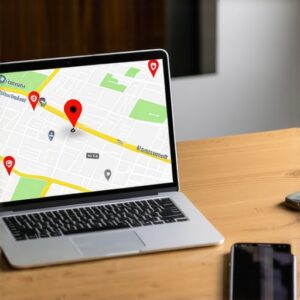
The ghost in the GPS coordinates
The light hits the storefront at an angle that reveals the peeling vinyl of a fake business name; it is a glitch in the urban fabric that the algorithm is finally starting to notice. I remember a top ranking roofing company that vanished from the Map Pack overnight. They had dominated the city center for years. Everyone wondered why they fell off a cliff. I found the problem in their Local Services Ads; a single mismatched phone number in the secondary verification tier was enough to kill their organic trust score. This is the reality of the modern proximity beacon. A business listing is a spatial data point that requires absolute precision to maintain its visibility in the local three pack. Software has evolved from simple data entry to a sophisticated forensic tool that identifies these mismatched signals before the algorithm decides to ghost your profile. When you use a custom ranking toolkit we use to audit all new profiles, you are not just checking boxes; you are verifying the mathematical salience of your physical location.
Why your physical address is a liability
Your physical address acts as the anchor for your proximity signal but it can also trigger a spatial filter that hides your listing. If your office is located in a high density building with fifty other service providers, the algorithm may treat your listing as a duplicate or a low trust entity. I have seen businesses get buried because they shared a suite number with a defunct law firm. Understanding why two business profiles are hurting your rank is the first step in cleaning up this spatial clutter. Software allows us to visualize these filters by mapping the exact GPS coordinates of every competitor. We can see where the centroid of a search category lies and how far your pin sits from that invisible center of gravity. If your coordinates are even slightly off, the trust loop breaks. This is why how to prove your business is real becomes a technical exercise in data matching rather than a simple appeal process.
“Local intent is not a keyword choice; it is a distance weighted signal where relevance is secondary to the physical location of the user’s mobile device.” – Map Search Fundamental
The three mile radius that determines your revenue
The proximity radius is a dynamic boundary that expands and contracts based on the density of local competition and user behavior. In a crowded city center, your ranking might only extend for three blocks; in a rural area, it might stretch for twenty miles. Software helps us track these shifts by using grid based rank tracking. Instead of seeing a single ranking number, we see a heat map of the city. You might be number one at your front door but number twenty at the coffee shop around the corner. This is why why your proximity signal is weak and how to strengthen it is the most frequent question I receive from frustrated owners. To win the 3-pack, you must optimize for the edges of your service area, not just the center. This involves pushing location signals through geo tagged images and localized content that proves your presence in specific neighborhoods.
Local Authority Reading List
- Recovering your spot after a name fix
- Why map rankings drop during updates
- The technical audit that finds hidden leads
- The plan for a hard suspension recovery
Forensic traces of service area polygons
Service area businesses operate without a visible pin which makes their ranking logic entirely dependent on the strength of their service area polygons. If your service area is too broad, you dilute your local authority; if it is too narrow, you miss out on high intent leads. Advanced software allows us to analyze the overlap between your service area and the actual locations of your reviews. If you claim to serve a fifty mile radius but all your reviews come from a five mile circle, the algorithm will ignore your claims. This is where how to optimize local seo for service areas becomes a game of proving your workers are actually on the ground. We use software to automate the check in process, creating a trail of digital breadcrumbs that verify your presence in every zip code you target. This prevents the algorithm from filtering you out in favor of businesses with a physical storefront.
Why keyword stuffing is a digital death sentence
Using a keyword stuffed business name might provide a temporary ranking boost but it eventually triggers a manual review or an algorithmic penalty. I have watched dozens of businesses fall into this trap. They change their name to Best Plumber Chicago and jump to the top, only to be suspended a week later. Learning how to recover your 3-pack spot after fixing a name is a painful process that involves re verifying your entire identity. Software tools now flag these risky names in your local area, allowing you to report competitors who are cheating. This is the only way to level the playing field. If you find yourself hit by a penalty, you need seo services to recover from google penalty that focus on restoring your core brand trust rather than trying to game the system again. The algorithm is smart enough to see through the veneer of a keyword stuffed profile.
The invisible verification loops of Local Services Ads
Local Services Ads create a secondary layer of trust that directly impacts your organic map rankings through a shared verification ecosystem. If your LSA profile has a different phone number or address than your Google Business Profile, it creates a conflict in the knowledge graph. This is the centroid collapse I mentioned earlier. Software can sync these data points, ensuring that your background checks, license verifications, and insurance documents are all tied to the same digital entity. This is why why your competitors map pin stayed up often comes down to the quality of their back end verification. If Google trusts your business as a screened and guaranteed provider, it is much more likely to show your pin in the organic 3-pack. Automated tools can monitor your LSA status and alert you the moment a document expires or a verification loop fails.
“Relevance in local search is determined by the intersection of business category accuracy and the linguistic patterns found in customer feedback.” – Proximity Logic Review
Automated citation consistency and the NAP myth
Consistency in name address and phone number is no longer about the quantity of citations but the authority and accuracy of the primary data sources. The old strategy of blasting your info to a thousand dead directories is over. Today, software must focus on the data aggregators like Foursquare, Data Axle, and Neustar. If these core databases have the wrong information, it will keep leaking into your profile no matter how many times you edit it. This is the truth about citation cleanup that many agencies ignore. You need an automated system that locks your data at the source. This prevents the silent algorithm updates from changing your hours or your phone number without your permission. If you manage multiple locations, you must use a toolkit for multiple business locations to keep everything synchronized across the web.
The digital key to local rankings
The ultimate goal of using software for local SEO is to remove the friction between your physical business and the digital representation of that business. Whether you are dealing with a sudden surge in fake negative reviews or trying to fix inconsistent phone numbers, the solution is always found in the data. The street photographer knows that the truth is in the details, the small glitches that everyone else misses. By using a gmb optimization toolkit for service businesses, you can see these glitches before they turn into ranking drops. The 3-pack is not a trophy that you win once; it is a position that you defend every day through constant monitoring and data hygiene. If your phone has stopped ringing, the answer is likely buried in a metadata conflict or a proximity filter that only a technical audit can reveal.